If you have numbness, tingling, burning, weakness or cramping in your arms or legs, your doctor may refer you for an EMG. Here is exactly what happens, so you can walk in relaxed.
At a glance: 30–60 minutes · no sedation · no fasting · drive yourself home · results discussed the same day.
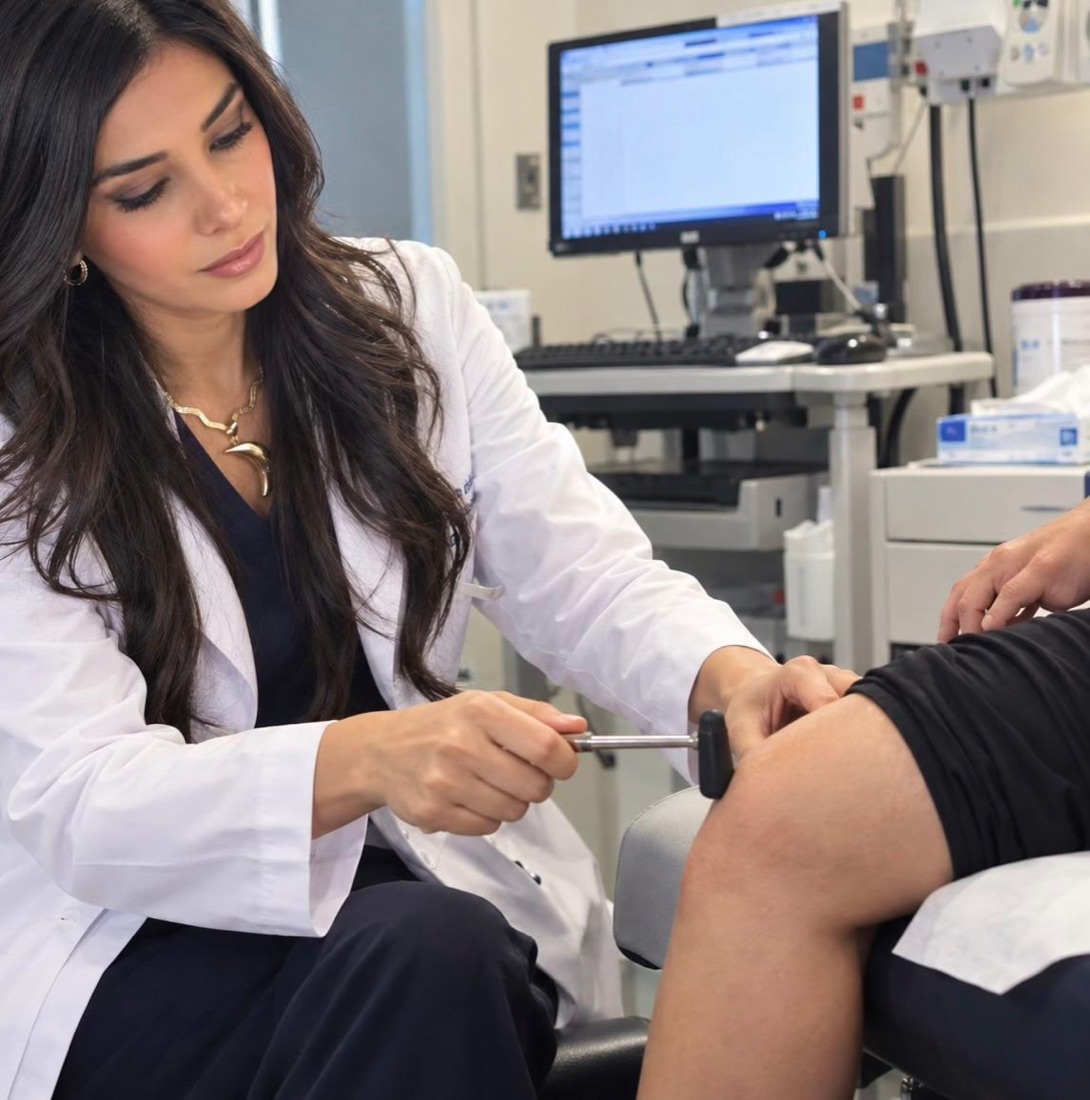
Two tests in one visit
Nerve conduction studies (NCS)
Small sticky electrodes are placed on the skin. A brief electrical pulse stimulates the nerve and the response is recorded. This measures how fast and how strongly the nerve carries signals. Most people describe it as a quick tap or a static-shock sensation.
Needle electromyography (EMG)
A very fine, sterile, single-use needle electrode is placed in selected muscles to "listen" to their electrical activity at rest and when you tighten them gently. There is no electrical shock during this part. It feels like a small pinch, similar to acupuncture.
What an EMG can diagnose
- Nerve entrapment: carpal tunnel syndrome, ulnar neuropathy at the elbow, peroneal neuropathy at the knee
- Pinched nerve roots: cervical and lumbar radiculopathy (sciatica)
- Neuropathy: diabetic, B12-related, hereditary, toxic or inflammatory (Guillain-Barré, CIDP)
- Muscle disease: myopathy and myositis
- Neuromuscular junction disorders: myasthenia gravis
- Motor neuron disease: e.g. ALS evaluation
- Nerve injury: severity and prognosis after trauma or surgery
How to prepare
- Shower on the day of the test. Don't apply lotion, oil or cream to your arms or legs.
- Wear loose clothing that can be rolled up easily.
- Keep hands and feet warm, since cold limbs slow nerve signals and can distort results.
- Take your usual medications unless told otherwise.
- Tell us in advance if you take blood thinners, have a pacemaker or defibrillator, have lymphedema, or have myasthenia gravis and take pyridostigmine.
- Bring previous EMG reports and relevant MRI results.
Why the physician matters
Professional guidance from the American Association of Neuromuscular & Electrodiagnostic Medicine (AANEM) emphasises that electrodiagnostic testing is an extension of the neurological examination. It should be performed or directly supervised by a physician trained in electrodiagnostic medicine, who adapts the study as findings emerge. Dr. Agha performs and interprets every study herself.
After the test
There is no downtime. Mild soreness or a small bruise where the needle was placed can occur and settles within a day or two. Dr. Agha explains the key findings before you leave, and a full report goes to your referring physician. That report often determines whether you need a splint, physiotherapy, medication, an injection or a surgical referral.
Sources
- AANEM. Proper performance and interpretation of electrodiagnostic studies. Muscle Nerve. 2015;51(3):468–471.
- Preston DC, Shapiro BE. Electromyography and Neuromuscular Disorders. 4th ed. Elsevier; 2020.
- Jablecki CK, et al. Practice parameter: Electrodiagnostic studies in carpal tunnel syndrome. Neurology. 2002;58(11):1589–1592.
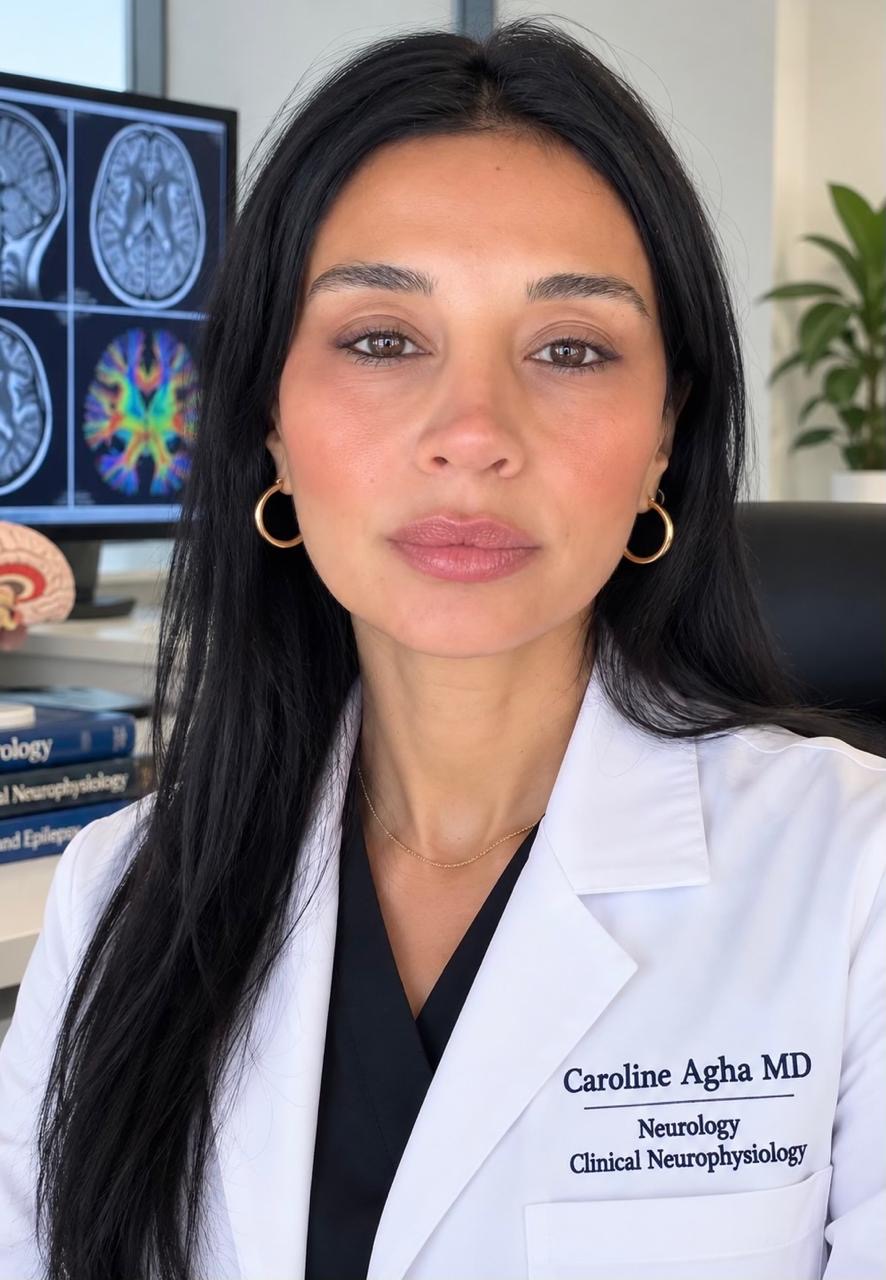
American board-certified neurologist with subspecialty expertise in clinical neurophysiology. More than 10 years of practice in Chicago and Beirut. Sees patients in Beirut, Beverly Hills and Upland.
This article is educational and is not a substitute for a medical consultation.